Helmet Camera Mounting: Chin Mount, Side Mount or Motorcycle Mount?
Helmet Camera Mounting: Chin Mount, Side Mount or Motorcycle Mount?
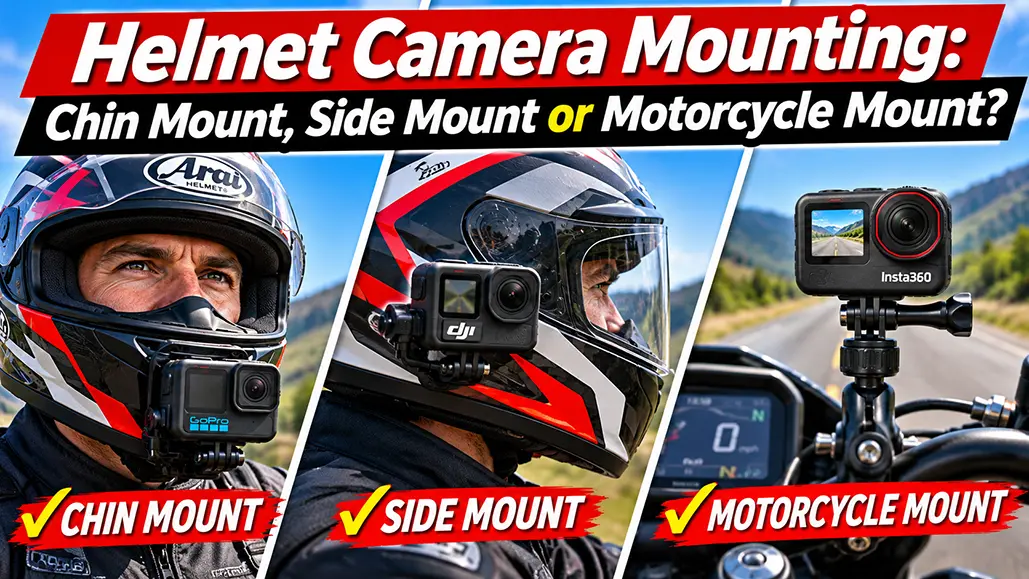
Choosing the right mounting position for your action camera can transform the quality of your motovlogging footage. From immersive rider perspectives to cinematic motorcycle shots, MotoVlogger explores the advantages and disadvantages of three popular camera mounting positions.
Whether you are using a GoPro, DJI Osmo Action or Insta360 camera, where you position your equipment can be just as important as the camera itself.
The mounting position influences everything from viewing angles and image stabilisation to wind resistance, audio quality and rider comfort. While there is no universally perfect solution, understanding the strengths and weaknesses of each mounting option can help you achieve better results.
For most motovloggers, the choice comes down to three main options: chin mounting, side mounting or attaching the camera directly to the motorcycle.
Chin Mount: The Motovlogger’s Favourite
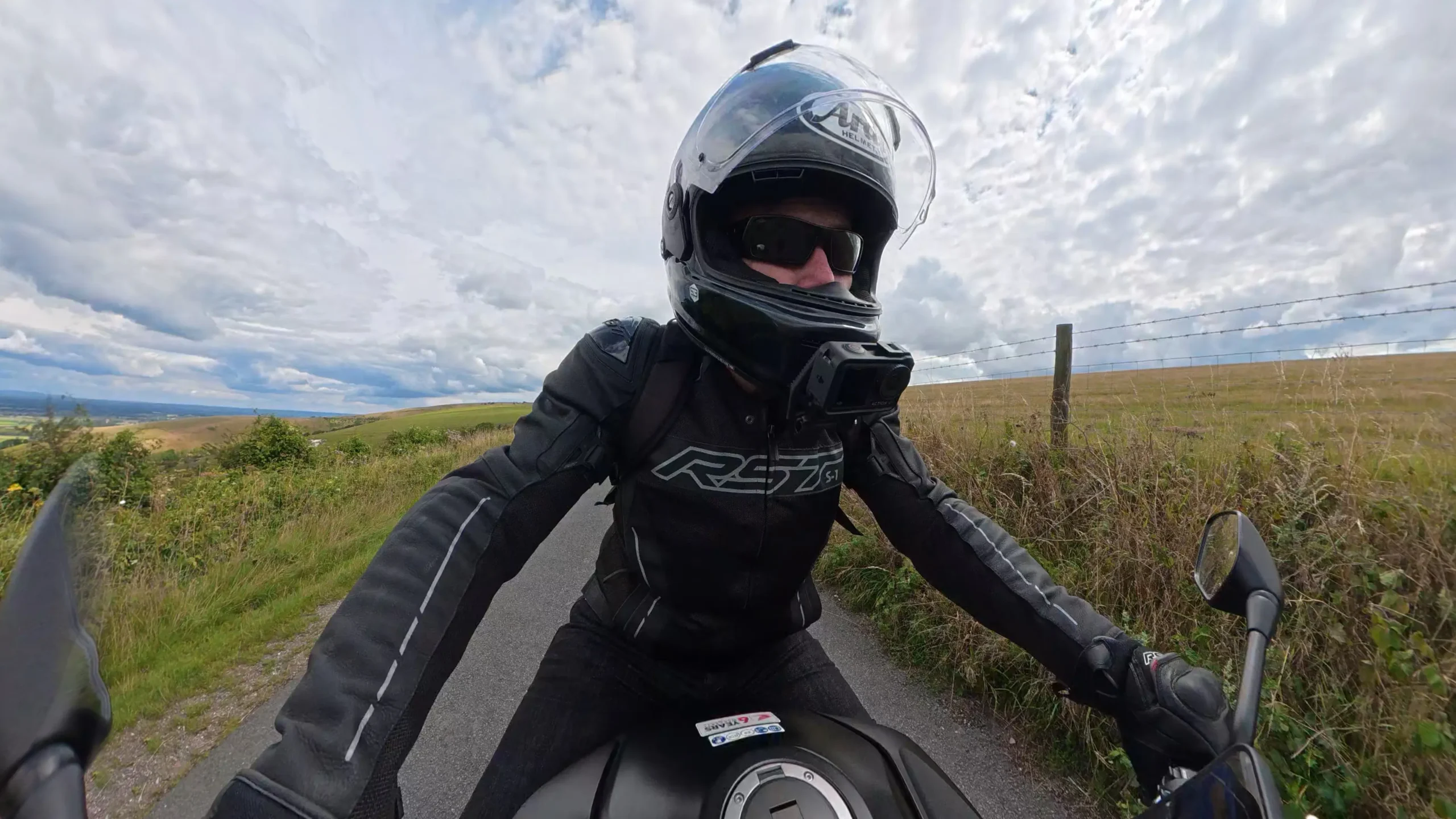
The chin mount has become one of the most popular camera mounting positions among motovloggers, particularly those wearing full-face motorcycle helmets.
Positioning the action camera near the centre of the helmet’s chin bar provides a natural first-person perspective, capturing the road ahead, handlebars, instruments and surrounding scenery.
This creates an immersive experience that allows viewers to feel as though they are riding the motorcycle themselves.
Another advantage is the relatively central weight distribution compared with a side-mounted camera. The position can also simplify routing an external microphone cable into the helmet.
However, not all motorcycle helmets are suitable for chin mounts. Helmet shape, ventilation systems and chin-bar design can make finding a compatible mounting solution challenging.
Modular helmets require particular consideration to ensure the camera does not interfere with the opening mechanism.
Advantages
- Natural first-person riding perspective.
- Central camera positioning.
- Excellent for traditional motovlogging.
- Convenient external microphone cable routing.
- Captures handlebars and motorcycle instruments.
- Follows the rider’s head movements.
Disadvantages
- Not compatible with every helmet design.
- May obstruct chin ventilation.
- Additional weight on the front of the helmet.
- Potential interference with modular helmet mechanisms.
- Requires careful camera angle adjustment.
MotoVlogger verdict: Our preferred mounting position for conventional motovlogging, riding commentary and motorcycle road reviews, where a suitable helmet-compatible mounting solution is available.
Side Mount: A Practical Alternative
Side mounting was particularly popular during the early years of motovlogging and remains a practical alternative for riders whose helmets are unsuitable for chin-mounted cameras.
The camera is generally positioned on either side of the helmet, providing a slightly offset view of the road ahead.
Depending on the camera’s field of view, part of the helmet may appear within the footage. Some creators enjoy this perspective because it adds character and reinforces the feeling that the audience is accompanying the rider.
However, mounting a camera on one side of the helmet can introduce uneven weight distribution and additional aerodynamic resistance, particularly at higher speeds.
The resulting footage may also feel less natural than a centrally positioned chin-mounted camera.
Advantages
- Alternative for helmets unsuitable for chin mounting.
- Potentially compatible with certain open-face helmets.
- Interesting alternative viewing perspective.
- Straightforward installation with suitable mounts.
- Convenient microphone cable routing in some setups.
Disadvantages
- Off-centre viewing angle.
- Uneven weight distribution.
- Potentially increased wind resistance.
- Helmet may appear prominently in footage.
- Possible interference with helmet intercom systems.
MotoVlogger verdict: A worthwhile alternative for riders who cannot use a chin mount, particularly those wearing compatible open-face or unusually shaped helmets.
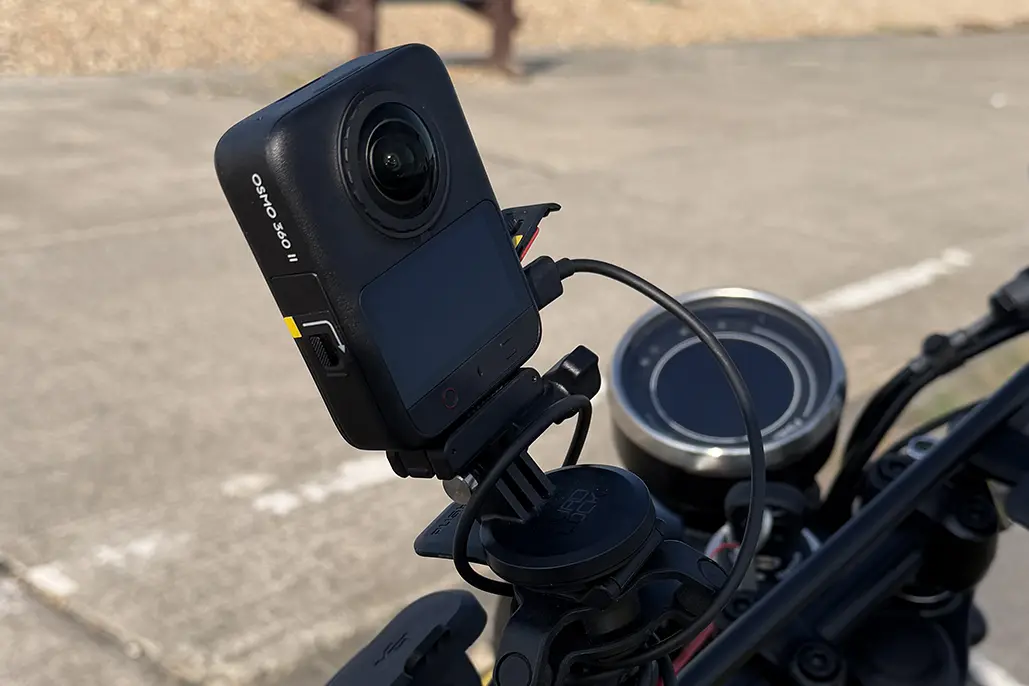
Motorcycle Mount: Capturing a Different Perspective
Mounting an action camera directly to the motorcycle opens up an entirely different range of creative possibilities.
Handlebars, dedicated accessory mounting points and suitable luggage mounting systems can provide interesting perspectives that are difficult to achieve with a helmet-mounted camera.
Unlike helmet-mounted footage, a motorcycle-mounted camera generally follows the direction of the motorcycle rather than the rider’s head movements. This can produce a more consistent viewing angle, particularly when travelling along scenic roads.
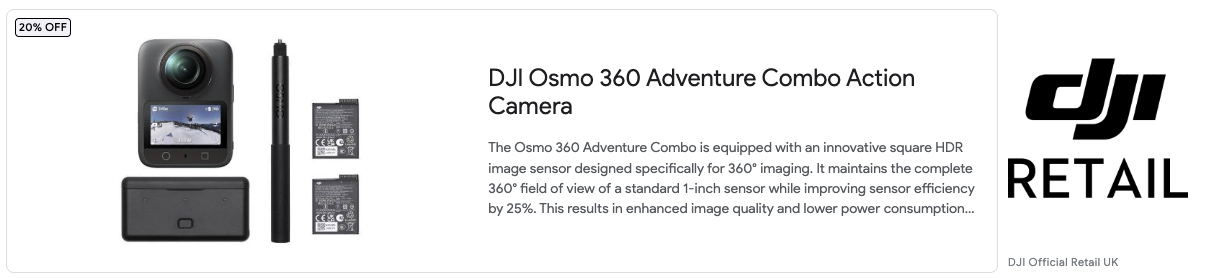
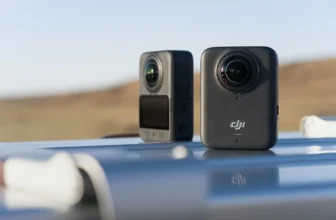
Motorcycle mounts are also particularly useful for dedicated 360-degree cameras, such as the DJI Osmo 360 II, allowing creators to capture multiple perspectives and reframe their footage during editing.
However, vibration is one of the biggest challenges associated with motorcycle-mounted cameras.
Engine vibrations and uneven road surfaces can affect image quality, even when using modern electronic image stabilisation. The quality, rigidity and positioning of the mounting system are therefore particularly important.
Advantages
- No additional weight attached to the helmet.
- Wide variety of creative camera angles.
- Excellent for cinematic motorcycle footage.
- Particularly useful for 360-degree cameras.
- Consistent viewpoint independent of head movement.
- Potential access to external power when safely installed.
Disadvantages
- Engine and road vibration.
- Greater exposure to road debris.
- Potential obstruction from windscreens or motorcycle components.
- Additional audio recording arrangements may be required.
- Mounting equipment must withstand sustained vibration and wind loading.
MotoVlogger verdict: Our preferred option for supplementary footage, cinematic touring videos and creative 360-degree motorcycle filming.
Which Camera Mount Is Best for Different Types of Motovlogging?
| Type of content | Recommended mounting position |
|---|---|
| Traditional motovlogging | Chin mount |
| Motorcycle road reviews | Chin mount |
| Open-face helmet filming | Compatible side mount |
| Motorcycle touring videos | Chin and motorcycle mounts |
| Cinematic motorcycle footage | Motorcycle mount |
| 360-degree action footage | Motorcycle mount |
| Rider commentary | Chin mount |
| Scenic road footage | Motorcycle mount |
| Multi-camera productions | Combination of mounting positions |
Using Multiple Cameras for Better Motorcycle Videos
For motovloggers looking to improve their production quality, combining different camera mounting positions can be particularly effective.
A conventional action camera, such as the DJI Osmo Action 6, GoPro HERO13 Black or Insta360 Ace Pro 2, can provide the primary riding perspective when mounted to a compatible helmet.
A secondary camera, such as the DJI Osmo 360 II, mounted securely to the motorcycle, can capture additional perspectives, including rider-facing footage, surrounding scenery and third-person riding sequences.
Switching between these viewpoints during editing can make longer motorcycle videos more engaging and visually interesting.
However, beginners should not feel pressured into purchasing multiple cameras immediately. A single action camera with a carefully chosen mounting position is more than sufficient to start producing enjoyable motorcycle content.
Camera Mounting and Motorcycle Helmet Safety
Safety should always take priority over capturing the perfect shot.
Before attaching any camera or accessory to a motorcycle helmet, consult the helmet manufacturer’s guidance regarding external accessories and mounting systems.
Motorcycle helmets are designed and tested to provide protection under specific conditions. Attaching an aftermarket camera may alter how the helmet interacts with surfaces during an accident, and an accessory should not automatically be considered safe simply because it is commercially available.
Important considerations include:
- Never drill into or structurally modify a motorcycle helmet.
- Avoid adhesives and cleaning products that could damage helmet materials.
- Check that mounting equipment does not obstruct vision or ventilation.
- Ensure the camera does not interfere with visor operation.
- Avoid arrangements that restrict normal head movement.
- Check mounting equipment regularly for damage or loosening.
- Never adjust cameras while riding.
Motorcycle-mounted cameras must also remain clear of steering controls, brake lines, suspension components and moving parts. Long extension poles should only be used where the mounting equipment is suitable for the anticipated loads and riding conditions.
In the UK, motorcycle helmets must comply with recognised safety standards. Further information is available through the official GOV.UK motorcycle helmet guidance.
MotoVlogger’s Final Verdict
For traditional motovlogging, the chin mount remains our preferred option, offering a natural first-person perspective that brings viewers closer to the riding experience.
Side mounting provides a useful alternative for riders whose helmets cannot accommodate a suitable chin mount, while motorcycle mounting offers greater creative freedom, particularly when using modern 360-degree cameras.
For creators looking to develop a more cinematic filming style, combining a conventional helmet-mounted action camera with a motorcycle-mounted 360-degree camera could provide an excellent balance between immersive commentary and creative visual storytelling.
Ultimately, the best mounting position depends on your motorcycle, helmet, camera equipment and the type of content you want to create.
Whatever mounting solution you choose, remember that riding safely should always come before recording footage.
Ride safely, keep recording and enjoy sharing your motorcycle adventures.
This feature provides general editorial guidance rather than the results of comparative helmet impact or camera mounting safety tests.