The Ultimate Motovlogging Setup for 2027: Everything You Need to Get Started
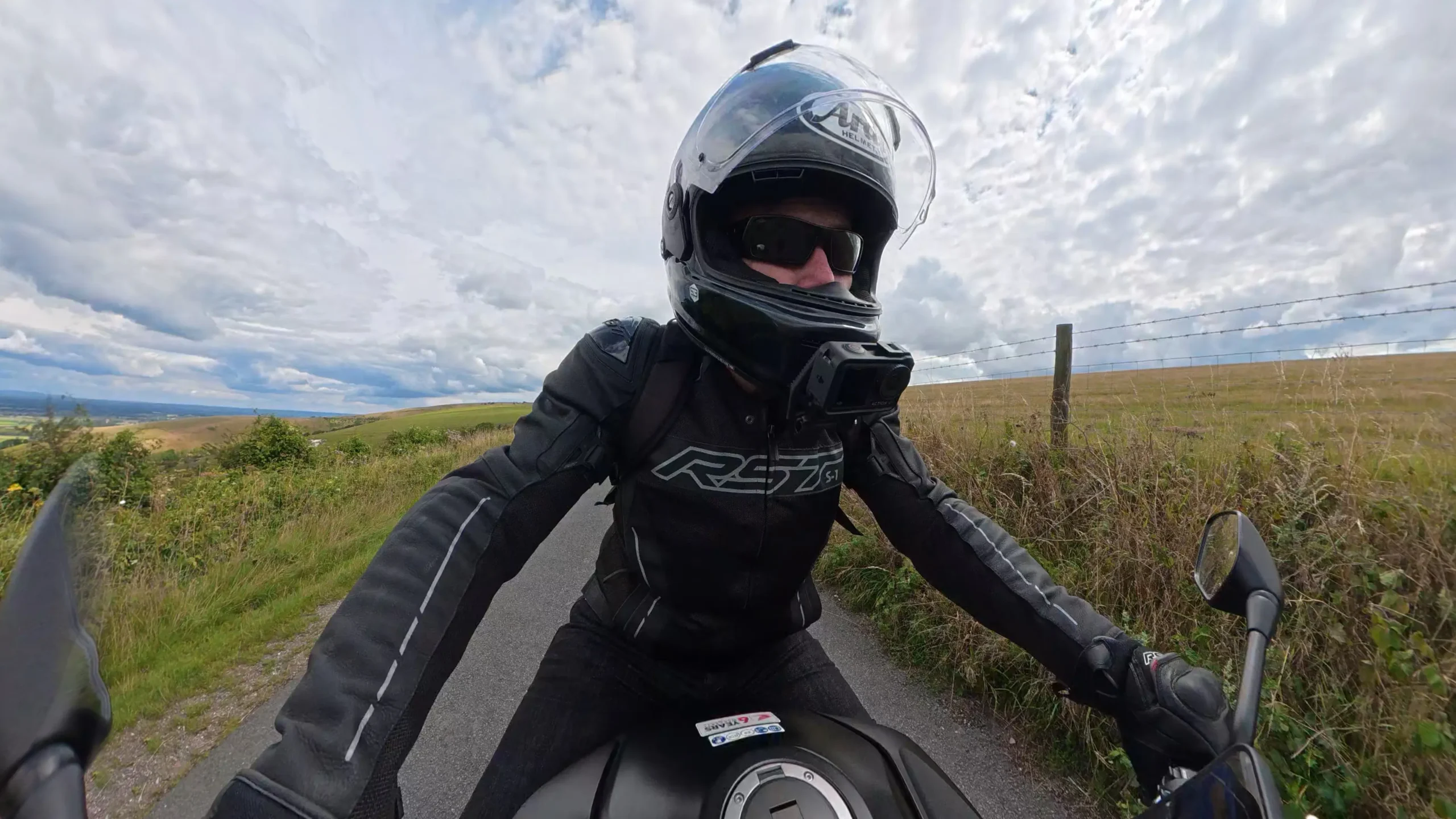
Photo by motovlogging.co.uk
From choosing your first action camera to capturing crystal-clear audio, mounting equipment safely and editing professional-looking footage, MotoVlogger explores everything you need to start creating motorcycle videos in 2027 — without spending a fortune.
Motovlogging has evolved considerably since the early days of attaching a basic action camera to a motorcycle helmet and hoping for the best. Today’s riders have access to sophisticated image stabilisation, high-resolution recording, wireless microphones, 360-degree cameras and increasingly capable editing software. What once required expensive professional equipment can now be achieved with a relatively compact and affordable setup.
Yet despite all this technology, the fundamental appeal of motovlogging remains unchanged. It is about sharing the experience of riding a motorcycle, capturing memorable journeys, documenting adventures and connecting with an audience that understands the freedom of life on two wheels.
Whether you are planning to launch a YouTube channel, produce motorcycle reviews, document touring adventures or simply record your weekend rides, getting started does not need to be complicated.
The secret is choosing equipment that works reliably together, rather than buying the most expensive products available.
For 2027, here is what aspiring motovloggers should consider before pressing record.
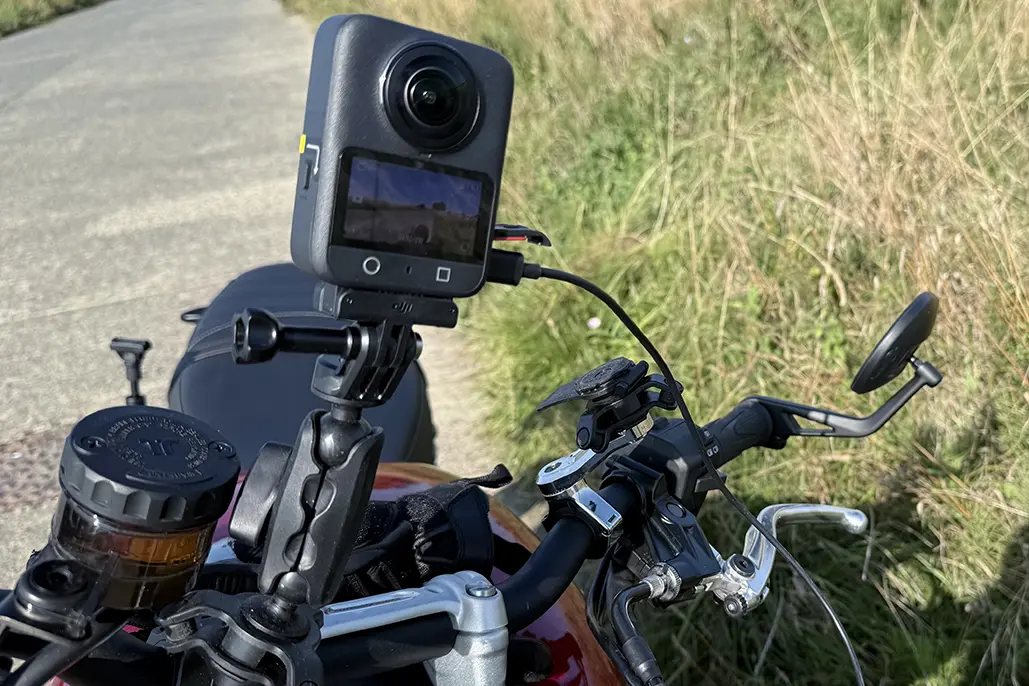
Photo by motovlogging.co.uk
Choosing Your First Motovlogging Camera
The camera is the centrepiece of any motovlogging setup, but choosing the right one involves more than comparing headline resolutions.
For most beginners, a conventional action camera remains the sensible starting point. These compact devices are designed to withstand vibration, changing weather conditions and the occasional knock, while offering image stabilisation that makes motorcycle footage considerably more watchable.
Established manufacturers such as GoPro, DJI and Insta360 offer different approaches to recording a ride.
DJI’s Osmo Action 6, for example, features a 1/1.1-inch sensor, variable aperture and electronic stabilisation, alongside support for compatible wireless microphones through DJI’s OsmoAudio system. These are particularly useful features for riders recording changing light conditions and spoken commentary.
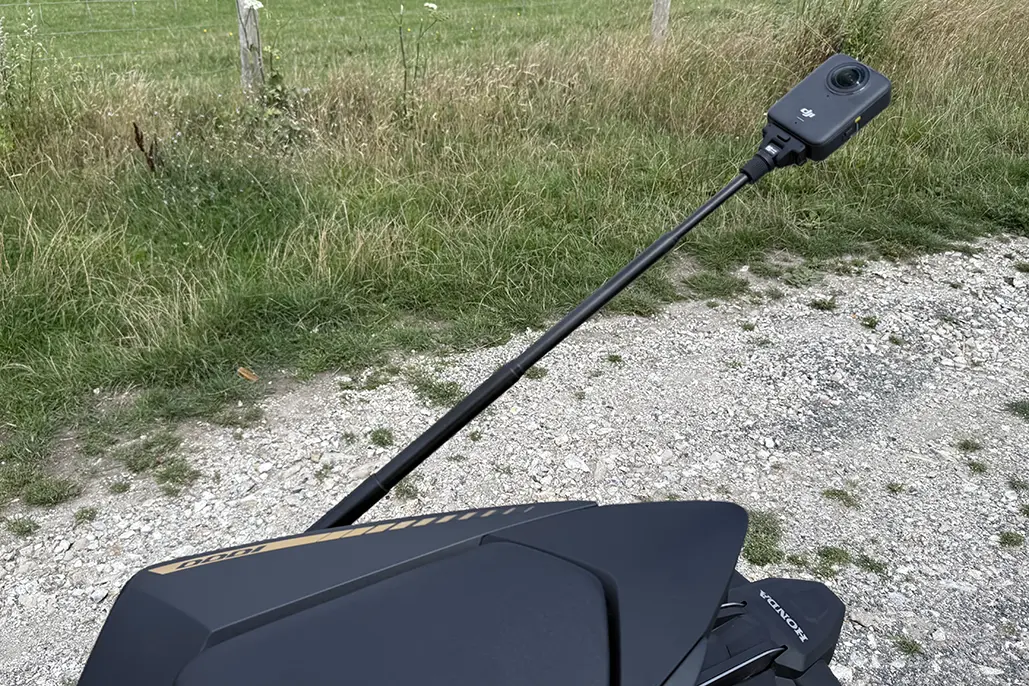
Meanwhile, 360-degree cameras offer another creative possibility. The Insta360 X5 records 8K 360-degree video, allowing creators to select their preferred viewpoint afterwards. Instead of deciding exactly where the camera should point during a ride, the rider can reframe the footage during editing.
However, 360-degree filming introduces additional editing requirements, larger files and more vulnerable exposed lenses.
For beginners, reliable 4K recording, effective stabilisation and dependable audio connectivity are generally more valuable than chasing the highest possible resolution.
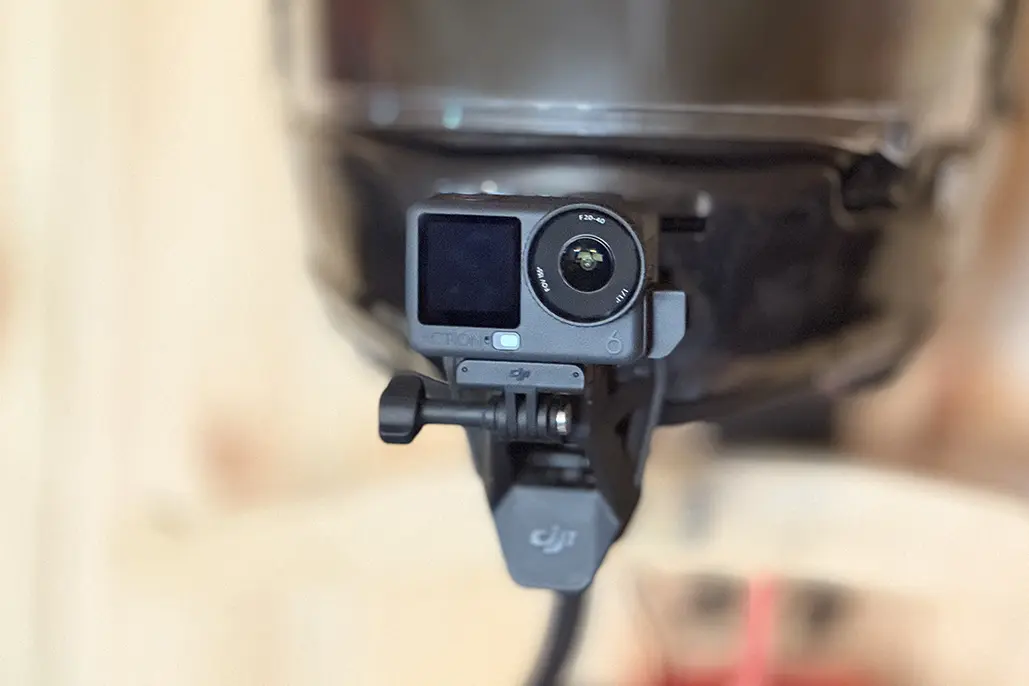
Photo by motovlogging.co.uk
Helmet Mounts: Getting the Camera Position Right
Camera positioning has a significant influence on how viewers experience a motorcycle video.
A chin-mounted camera can provide a natural perspective, placing the viewer close to the rider’s line of sight. It captures the road, handlebars and surrounding scenery in a way that feels immersive without excessive movement.
Side-mounted cameras offer an alternative perspective, although the off-centre position can make footage appear less natural.
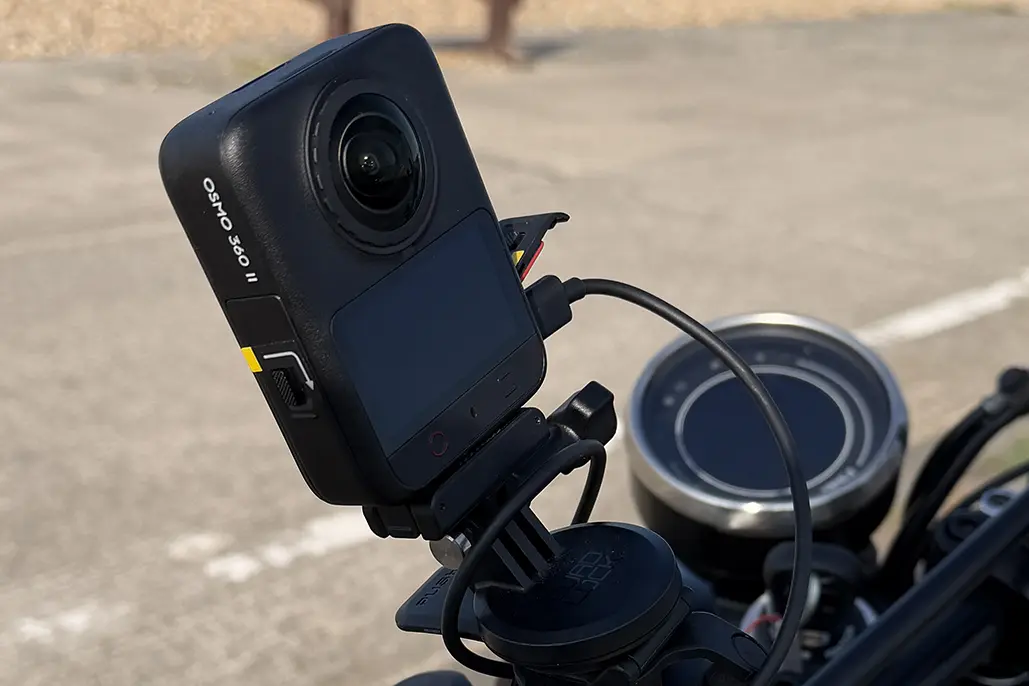
Motorcycle-mounted cameras, attached to suitable locations such as handlebars or dedicated mounting points, can produce useful supplementary footage. However, engine vibration and road imperfections may introduce unwanted movement.
Safety must always take priority.
Before fitting any equipment to a helmet, check the helmet manufacturer’s guidance. Avoid drilling into the shell, modifying its structure or placing equipment where it could compromise protective performance. Camera mounts should never interfere with visor operation, visibility or normal head movement.
UK motorcycle helmets must meet recognised safety standards, and riders should ensure their equipment remains compliant.
A secondary tether may help prevent equipment from being lost if a mount becomes detached, but it should not create an additional snagging hazard.
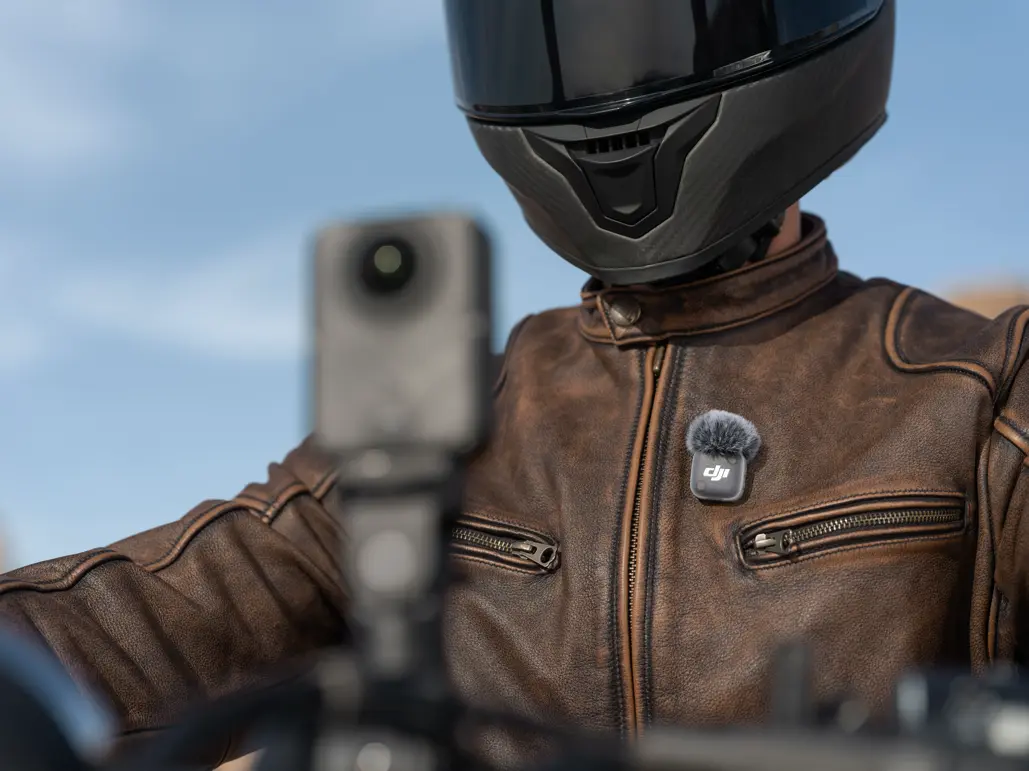
Photo by DJ
Audio: The Most Important Part of Your Motovlog
Beautiful 4K footage means very little if viewers cannot understand what the rider is saying.
Wind noise is arguably the greatest technical challenge in motovlogging. Even at moderate road speeds, air turbulence around a motorcycle helmet can overwhelm a camera’s built-in microphone.
The solution is usually a separate microphone positioned inside the helmet, ideally somewhere protected from direct airflow.
Small lavalier microphones are popular because they are relatively inexpensive and can be positioned close to the rider’s mouth. Foam windshields and carefully placed wind protection can make a substantial difference.
Microphone positioning requires experimentation. Too close to the mouth, and breathing or speech distortion becomes distracting. Too far away, and engine noise and wind can dominate the recording.
Wireless microphone systems offer another option, although compatibility with action cameras varies considerably.
Some systems can connect directly to compatible cameras, while others require an adapter or separate recorder.
A standalone audio recorder provides additional flexibility, particularly for riders wanting to capture commentary, engine sounds and ambient audio independently.
Before spending money on sophisticated microphones, conduct a short test ride and listen carefully to the results.
A modest microphone installed correctly will often outperform a more expensive system positioned poorly.
Power, Batteries and Memory Cards
Running out of battery halfway through a memorable ride is frustrating. Discovering that your memory card has failed can be even worse.
Motovlogging places considerable demands on camera batteries, especially when recording high-resolution footage with stabilisation enabled.
Manufacturer battery-life claims are typically measured under controlled conditions, and real-world results can vary with temperature, recording settings and screen usage.
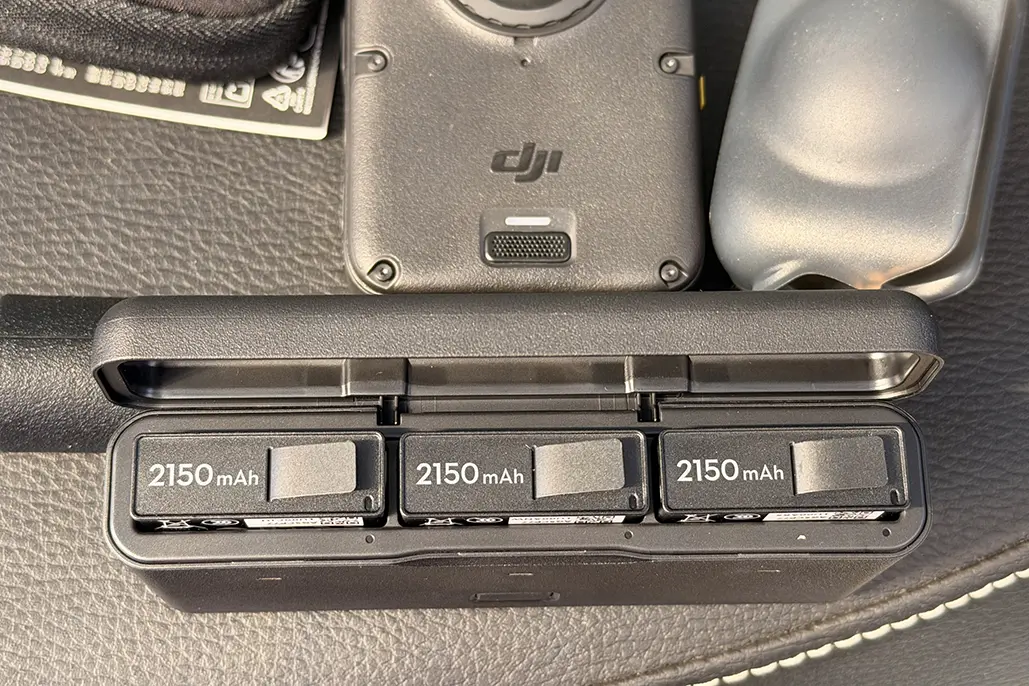
Carrying at least one spare battery is sensible, while a compact charging case can be useful during longer trips.
Memory cards deserve equal attention.
Choose reputable, camera-compatible microSD cards with appropriate sustained write-speed ratings. Many modern action cameras recommend V30-rated cards or better, depending on their recording requirements.
For regular 4K recording, a 128GB or 256GB card can provide a useful starting point, although recording time depends heavily on bitrate.
It is also worth carrying a second card rather than relying entirely on one large-capacity card.
Recording Settings: Keep Things Simple
New motovloggers can easily become overwhelmed by technical settings.
Fortunately, excellent footage does not require complicated configurations.
For everyday riding videos, 4K at 30 frames per second provides a strong balance between detail, file size and editing flexibility.
Recording at 60 frames per second can be useful for smoother movement or footage that may be slowed down later, although it generally requires more storage and processing power.
Electronic image stabilisation should normally be enabled for motorcycle footage, provided it is compatible with the selected recording mode.
A wide field of view captures more of the road and surrounding environment, but extremely wide settings can introduce distortion.
Exposure compensation, white balance and colour profiles can be explored as experience grows.
For beginners, the priority should be consistent, correctly exposed footage rather than complicated cinematic settings.
Editing Software: Turning a Ride into a Story
Recording a motorcycle journey is only half the process. Editing transforms raw footage into something people actually want to watch.
Fortunately, aspiring motovloggers have access to several capable editing applications.
DaVinci Resolve offers a powerful free version with professional editing, colour correction and audio tools.
Apple’s Final Cut Pro provides an alternative for Mac users, while Adobe Premiere Pro remains a widely used subscription-based option.
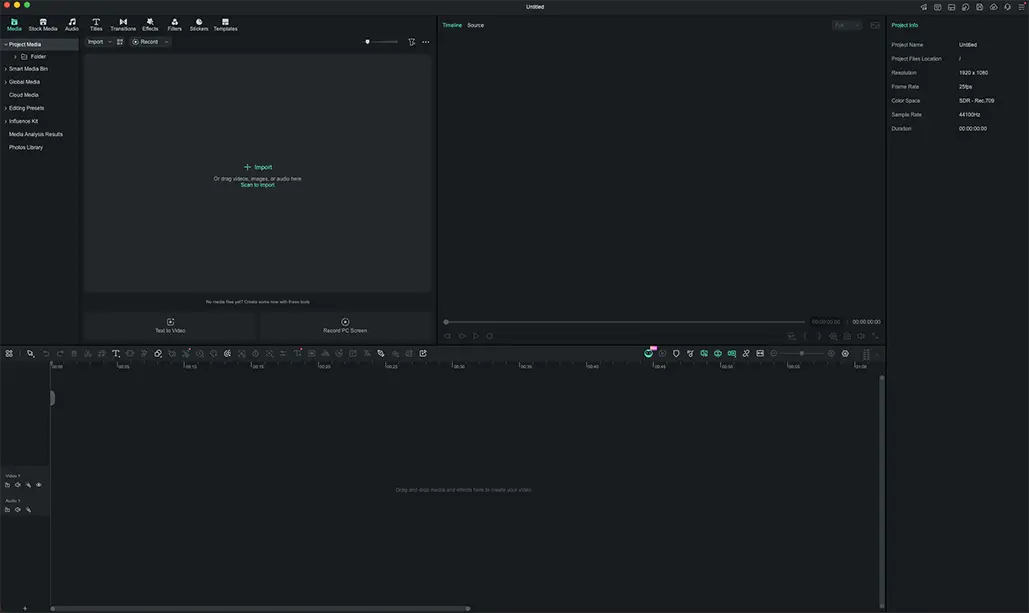
We personally use Wondershare Filmora for Mac, which is great for the average user, very easy to use and can be purchased here
For simpler projects, mobile editing applications can be sufficient, particularly when producing short-form content for YouTube Shorts, Instagram Reels or TikTok.
Regardless of software, the fundamentals remain the same.
Remove unnecessary footage, maintain a sensible pace and ensure the story progresses naturally.
A 90-minute motorcycle ride rarely needs to become a 90-minute video.
Instead, select the most interesting moments, introduce the journey, explain what makes the route worthwhile and provide a satisfying conclusion.
Additional footage of the motorcycle, scenery, roadside stops and interesting details can help break up long riding sequences.
Music should complement the footage rather than overpower commentary, and creators must ensure they have appropriate rights or licences for anything they publish.
Building a Setup Around Your Budget
One of the biggest misconceptions about motovlogging is that professional-looking videos require thousands of pounds of equipment.
In reality, a carefully chosen beginner setup can be assembled for considerably less.
Illustrative UK starter-kit budget
Planning allowances rather than verified retailer quotations.
| Action camera | £180–£350 |
| Helmet or motorcycle mount | £20–£45 |
| Microphone and connection accessories | £25–£90 |
| Memory card | £15–£35 |
| Spare battery or charging accessories | £25–£60 |
| Estimated total | £265–£580 |
Buying a previous-generation camera or a carefully inspected second-hand model can reduce the initial investment.
There is little reason to purchase multiple cameras, expensive wireless microphones or elaborate mounting systems before discovering what style of videos you enjoy creating.
Start with the essentials, identify the limitations of your equipment and upgrade only when there is a clear benefit.
Creating Your First Motovlog: Planning the Ride
The best equipment cannot compensate for a video without direction.
Before heading out, decide what the audience should take away from the experience. Perhaps you are exploring an unfamiliar road, reviewing a motorcycle, visiting a local café or discussing an issue affecting motorcyclists.
Having a simple theme makes filming and editing considerably easier.
For your first video, consider a short ride lasting around 30 to 45 minutes, with several planned stopping points.
Record an introduction before setting off, capture your riding commentary and finish with a short summary of the experience.
Remember that you are riding a motorcycle first and creating content second.
Set up equipment before moving, avoid adjusting cameras while riding and never allow filming to distract from traffic conditions.
When using cameras on public roads, respect other people’s privacy and consider the implications of publishing identifiable footage.
Beyond the Camera: Developing Your Own Style
As motovlogging continues into 2027, the challenge for new creators is not simply producing technically impressive footage. It is finding something distinctive to say.
Some riders specialise in touring adventures, while others concentrate on motorcycle reviews, commuting experiences, mechanical projects or conversations about everyday riding.
There is room for different approaches.
A relaxed commentary recorded during a Sunday ride can be just as engaging as an elaborately produced travel documentary.
Consistency, personality and an authentic enthusiasm for motorcycles are often more important than sophisticated production techniques.
YouTube Shorts and other vertical video platforms also provide opportunities to introduce audiences to longer features.
A memorable road, an interesting motorcycle or a particularly useful piece of advice can become a short video that encourages viewers to explore your wider content.
However, building an audience takes patience. Early videos may attract modest viewing figures, and success is rarely immediate.
Treat those first uploads as opportunities to learn rather than measures of failure.
Final Thoughts: Start Riding, Start Recording
The ultimate motovlogging setup for 2027 is not necessarily the most expensive camera, the largest collection of accessories or the latest editing software.
It is a reliable combination of equipment that allows you to concentrate on riding, storytelling and enjoying the experience.
A good action camera, secure mounting arrangement, properly positioned microphone, spare battery and straightforward editing application are enough to begin.
Everything else can follow as your skills develop.
Motorcycling offers an almost endless supply of stories, from everyday journeys and hidden country roads to long-distance adventures and encounters with interesting people.
The technology is simply a way of sharing those experiences.
Choose your equipment carefully, put safety first, find your own voice and start creating. Your next motorcycle ride could be the beginning of your motovlogging journey.
Originally posted on our dedicated MotoVlogger News website: https://motovlogging.co.uk/